Flow Probes and Aerodynamic Measurement in Wind Tunnel Testing
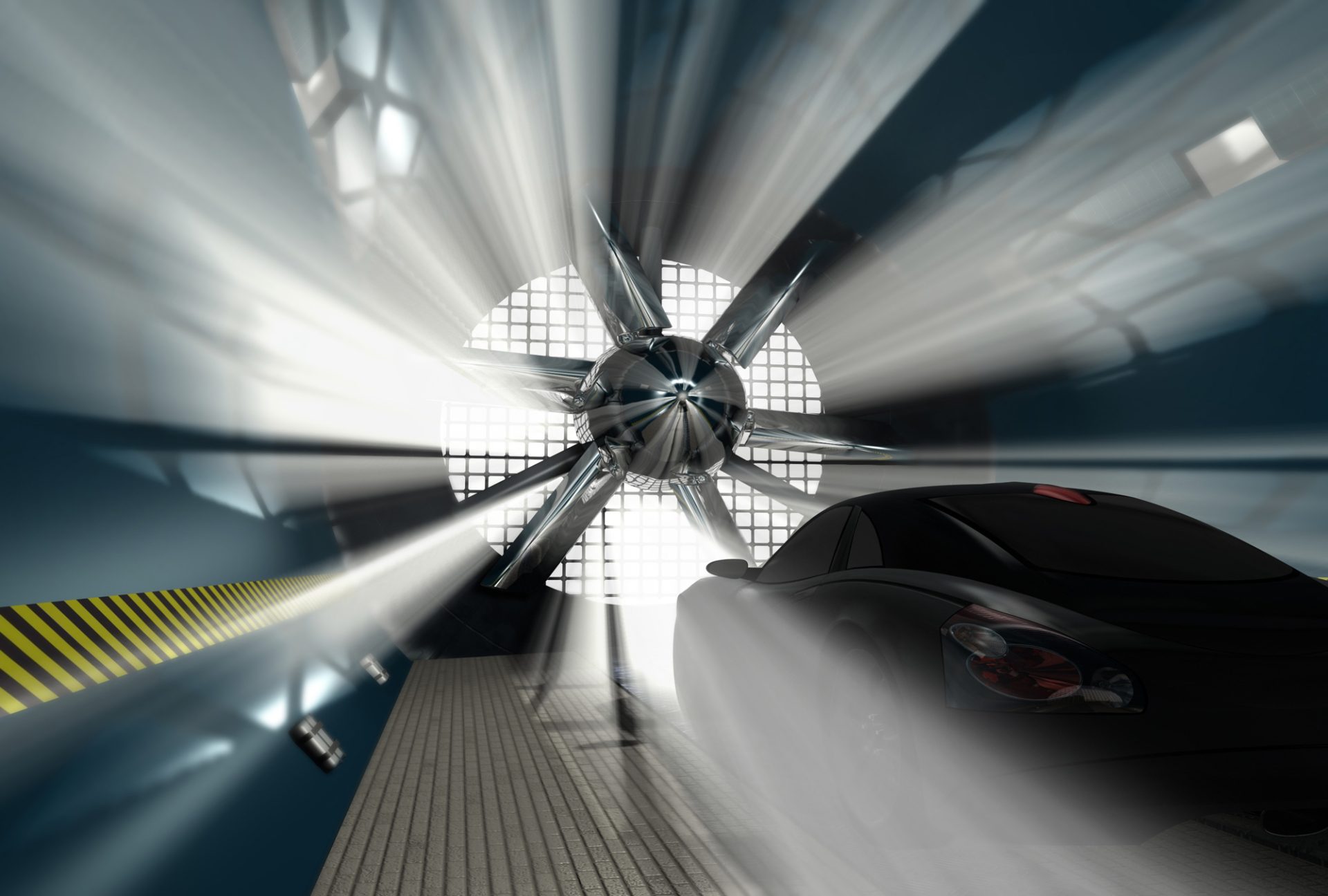
When most people picture a wind tunnel, they imagine a car sitting inside a room in front of a large spinning fan. That’s a reasonable starting point — but aerodynamic wind tunnel testing covers far more ground than that.
Wind tunnels are used to study the aerodynamics of airplanes, trucks, drones, rockets, racing cars, and virtually anything else that encounters air resistance. They range in scale from large enough to enclose a full-size vehicle to compact enough to evaluate a single component or scale model. The goal is always the same: to understand how air moves around a given object so that designs can be improved — whether that means better fuel economy, enhanced stability, or greater safety in challenging conditions.
To do that effectively, you need accurate measurements of pressure, flow velocity, and flow angle. That’s where precision flow probes come in.
Measuring Aerodynamics in a Wind Tunnel
Flow probes for wind tunnel testing
Multi-hole probes, Kiel probes, and yaw pitots are purpose-built instruments for measuring pressure, velocity, and flow angle in wind tunnel environments. A well-chosen probe takes fast, accurate measurements while remaining small enough not to disturb the flow it’s measuring — a balance that requires careful engineering.
K-Tec Systems supplies precision flow probes for professional aerodynamic testing in motorsport, aerospace, heavy vehicle, and UAV applications.
Wind tunnel instrumentation: what gets measured
A wind tunnel produces a controlled flow. The instrumentation turns that flow into data, and the quality of the test depends on it. Most programs, whether automotive, aerospace, or UAS, need some combination of the five measurements below.
| What you need | Instrument | Typical use |
|---|---|---|
| Total pressure at a point | Pitot or Kiel probe | Freestream speed, wake and duct surveys |
| Speed and flow direction | Multi-hole probe | Three-dimensional flow mapping, angle of attack and sideslip |
| Dynamic pressure plus wind yaw angle | Yaw pitot | Road and vehicle testing, correlation to tunnel and CFD data |
| Pressure at many points at once | Kiel rake, electronic pressure scanner | Boundary layer profiling, exhaust surveys, surface pressure |
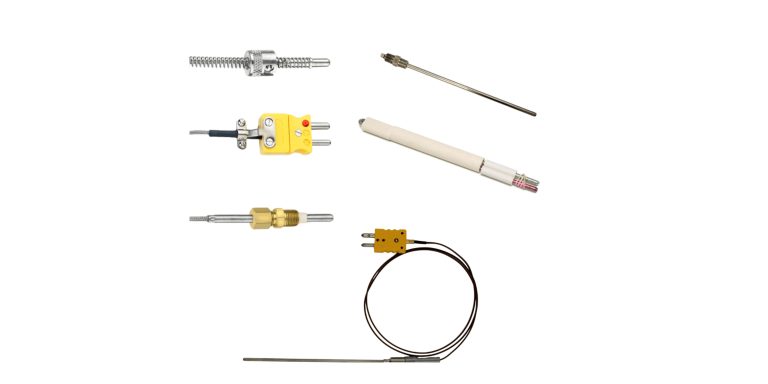
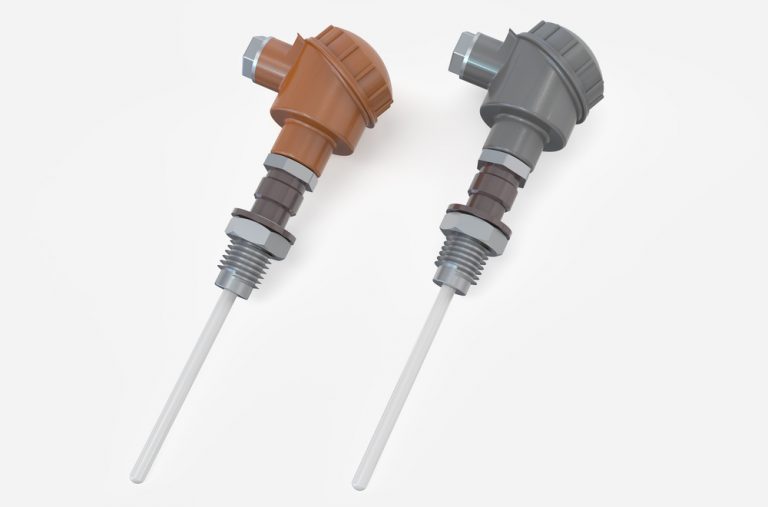
| Air temperature | Thermocouple or RTD | Air density for velocity calculations, thermal management tests |
Temperature belongs on this list because velocity is computed from dynamic pressure and air density, and density depends on temperature. An error in the air temperature reading carries directly into the velocity result. K-Tec Systems manufactures custom thermocouples that can be integrated alongside flow probes.
Kiel probe vs pitot tube
A standard pitot tube reads total pressure accurately only when it is aligned with the flow, typically within roughly 5° of the flow axis. Beyond that, the tip no longer captures a clean stagnation point and the reading falls off.
A Kiel probe surrounds the total pressure tube with a shroud that realigns incoming flow with the internal tube. This extends accurate total pressure measurement to flow angles of roughly 50°, depending on the design. That makes the Kiel probe the better choice in wakes, behind rotating machinery, in engine exhaust, and anywhere the flow direction is uncertain.
| Pitot tube | Kiel probe | |
|---|---|---|
| Measures | Total pressure | Total pressure |
| Angle tolerance | Roughly 5° | Roughly 50°, design dependent |
| Best for | Aligned, well-characterized flow | Uncertain or high-angle flow |
| Trade-off | Sensitive to misalignment | Larger tip because of the shroud |
Neither probe reports flow direction. When angle matters, use a multi-hole probe or a yaw pitot.
Pneumatic probing systems
A pneumatic probing system is a probe, the tubing that carries pressure from the probe ports, and the sensor that reads it, usually a pressure transducer or a multi-channel pressure scanner. The sensor sits outside the flow, which is why the probe tip can be small enough not to disturb the measurement.
A multi-hole probe uses five or more ports around the tip to resolve total pressure, static pressure, and flow angle in both yaw and pitch from a single position. Its output is only meaningful through a calibration map across the speed and angle range of the test, so ask for the calibration data when you specify one.
Three system-level choices affect data quality: tubing length and volume, which set the response time; scanner accuracy and zero stability, because drift over a long run looks like a design change; and probe size relative to the test section, because an oversized probe disturbs the flow it is measuring. These apply to automotive and aerospace programs alike, and to UAS air data work.
Flow probe types for wind tunnel testing
Multi-hole probes
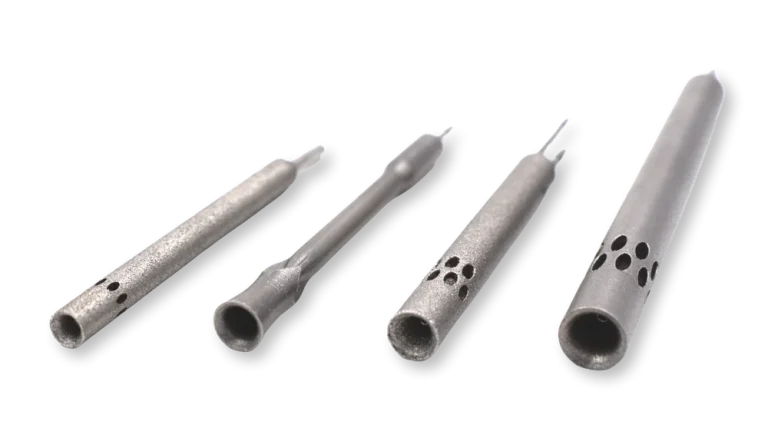
Five-hole probes use five pressure measurement ports arranged around the probe tip to resolve the full three-dimensional flow vector. From a single probe position, you can determine total pressure, static pressure, and flow direction in both yaw and pitch — even in highly complex, three-dimensional flows.
Probes are manufactured using Direct Metal Laser Sintering (DMLS) additive manufacturing, typically in stainless steel. Titanium is available for weight-critical applications, and Inconel for high-temperature environments up to 980°C. Minimum probe head diameter is 2mm. An optional integrated static ring improves static pressure accuracy in low-pressure, low-velocity gradient conditions — useful, for example, on the nose of an aircraft or UAV.
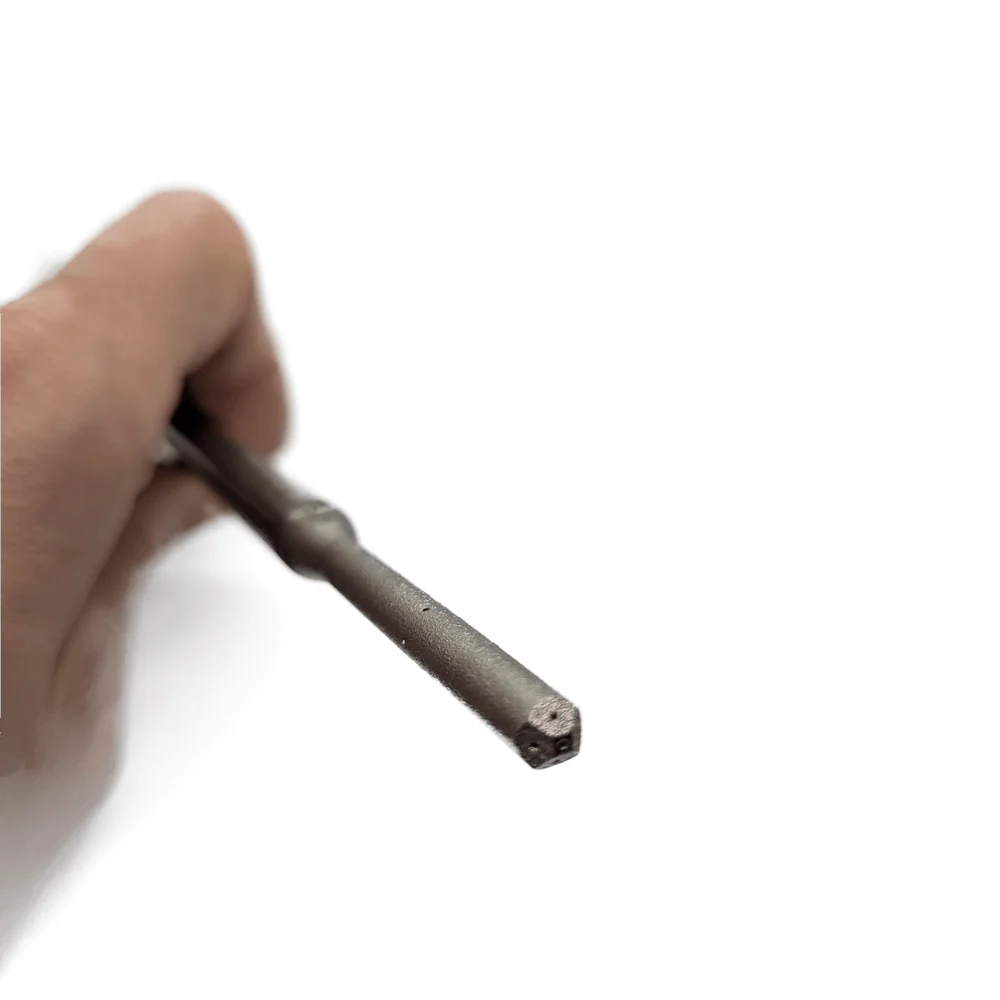
Probes should be individually calibrated across several flow speeds and over the full operating yaw and pitch angle range. Calibration data supplied as simple lookup tables is ready for implementation in real-time systems or post-processing workflows.
For wind tunnel applications that also require air temperature measurement, K-Tec Systems manufactures custom thermocouples that can be integrated alongside flow probes to provide a complete picture of flow conditions.
Kiel probes
Where total pressure measurement is the priority — particularly in complex or high-angle flows — Kiel probes offer a distinct advantage over standard pitot tubes. A traditional pitot tube maintains accuracy only within roughly ±5° of the flow axis. The Kiel probe’s outer shroud realigns incoming flow with the internal measurement tube, extending accurate total pressure measurement to flow angles up to ±50°.
Kiel probes can be produced using DMLS technology, with tip diameters as small as 1.6mm. Available in stainless steel or Inconel, they are heat-resistant to 980°C. Typical configurations include 90° and 0° heads, with or without a threaded shaft for mounting. Custom geometries and integration into larger assemblies are available.

Yaw pitots

Yaw pitots measure both dynamic pressure and wind yaw angle simultaneously — and that combination matters more than it might seem. Aerodynamic forces are heavily influenced by yaw, which can reach double digits in ambient wind conditions. Without accurate yaw measurement in the field, correlating road data back to wind tunnel or CFD results is unreliable.
Yaw pitots are produced in stainless steel using DMLS, with Inconel and titanium available for high-temperature or weight-sensitive applications. Each probe should be individually calibrated across several speeds over its full operating angle range, with calibration data provided as lookup tables.
Kiel rakes in a wind tunnel
For applications that require spatial flow mapping — boundary layer profiling, jet engine exhaust analysis, or full-scale vehicle testing — Kiel rakes provide simultaneous multi-point total pressure measurement across a defined area, delivering the spatial resolution that single probes cannot.

Kiel rakes can be configured as one-piece monolithic DMLS structures or as machined assemblies using individual Kiel probes with threaded shafts. Both approaches allow the rake geometry to be tailored to your specific test setup, from compact temperature-resistant arrays for jet engine diagnostics to large lightweight configurations for aerodynamic flow profiling. Recent applications include on-track Formula 1 testing, haulage truck road testing, wind tunnel boundary layer measurement, and jet engine exhaust analysis.
Data acquisition: pressure scanners
Probe accuracy is only as useful as the data acquisition system behind it. Look for a multi-channel differential pressure scanner with a high sample rate, low zero drift over 24 hours, and USB or Ethernet output, so the data can be logged on any laptop or desktop.
Frequently asked questions
How is dynamic pressure measured in vehicle wind tunnels, and what sensors are typically used for data logging?
Dynamic pressure is the difference between total pressure and static pressure. A pitot-static or Kiel probe senses both, and the difference is read by a differential pressure transducer or by one channel of a multi-channel electronic pressure scanner. The scanner output is logged by a data acquisition system at a fixed sample rate and averaged over each test point, and air temperature and absolute pressure are recorded alongside it so air density, and from it velocity, can be calculated. For a fuller walkthrough, see how dynamic pressure is measured in vehicle wind tunnels.
What is the difference between a Kiel probe and a pitot tube?
Both measure total pressure. A standard pitot tube is accurate only within roughly 5° of the flow axis, while a Kiel probe’s shroud extends accurate readings to roughly 50° depending on the design. Use a Kiel probe where flow direction is uncertain.
What does a multi-hole probe measure?
A multi-hole probe measures total pressure, static pressure, and flow angle in both yaw and pitch from a single position. It relies on a calibration map across the speed and angle range of the test.
Why is air temperature measured in a wind tunnel?
Air density depends on temperature, and velocity is calculated from dynamic pressure and density. A temperature error therefore becomes a velocity error. Thermocouples and RTDs are also used directly in cooling, brake, and thermal management tests.
What is a pressure scanner?
A pressure scanner is a multi-channel instrument that measures many pressures at once and outputs them to a data acquisition system. It lets one test point record every probe port, rake tube, or surface tap simultaneously.
Contact K-Tec Systems
K-Tec Systems can help you identify the right probe, scanner, and temperature sensor configuration for your test environment. To discuss your application, contact us at 248-414-4100 or contact@k-tecsystems.com.